
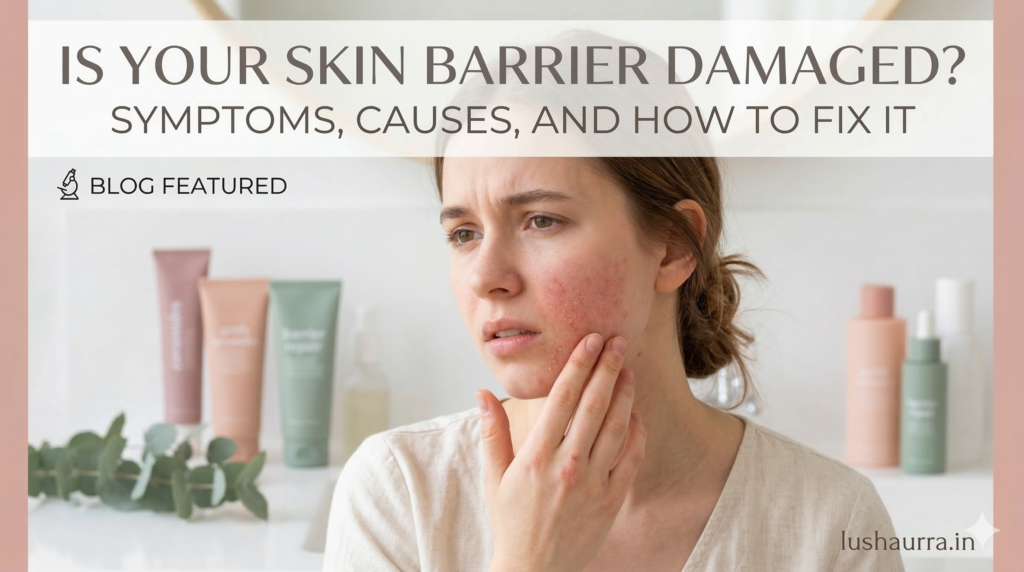
Hey, listen—has it ever happened that you’ve used expensive skincare products and followed trending reels, yet your skin still looks irritated, red, or dull—and you just don’t see any difference?
Many people assume the problem lies with the products themselves—thinking, “These products just don’t suit me.”
But in reality, the problem often stems from our daily habits and our diet.
The truth is, we all unknowingly engage in certain daily habits that slowly damage our skin barrier, compromising our skin’s health from both the inside and the outside.
And the most dangerous part?
This damage occurs slowly and silently. By the time we realize what’s happening, our skin has already become sensitive and compromised.
In this article, we’ll discuss 10 daily habits that could be destroying your skin barrier—and, more importantly, we’ll learn how to fix them.
If you want healthy, glowing, and resilient skin, make sure to read this article all the way to the end.
Firstly stop these big mistake to destroy your skin fastly check our guide
Table of Contents
Togglepersonal experience
Hey, listen—let me share a personal experience with you today. I live away from home, working, studying, and creating content. Amidst all of this, I often get so caught up that I simply don’t find the time to devote much care to myself. Eventually, my skin began to deteriorate gradually.
That was when I realized that while all these activities are indeed parts of life, taking care of one’s skin is just as integral a part of one’s lifestyle. Since then, I have become extremely diligent and careful about my skincare routine. So, I want to encourage you as well: make sure to carve out some time to pay a little attention to yourself—that way, your skin will glow, and your aura will shine too!
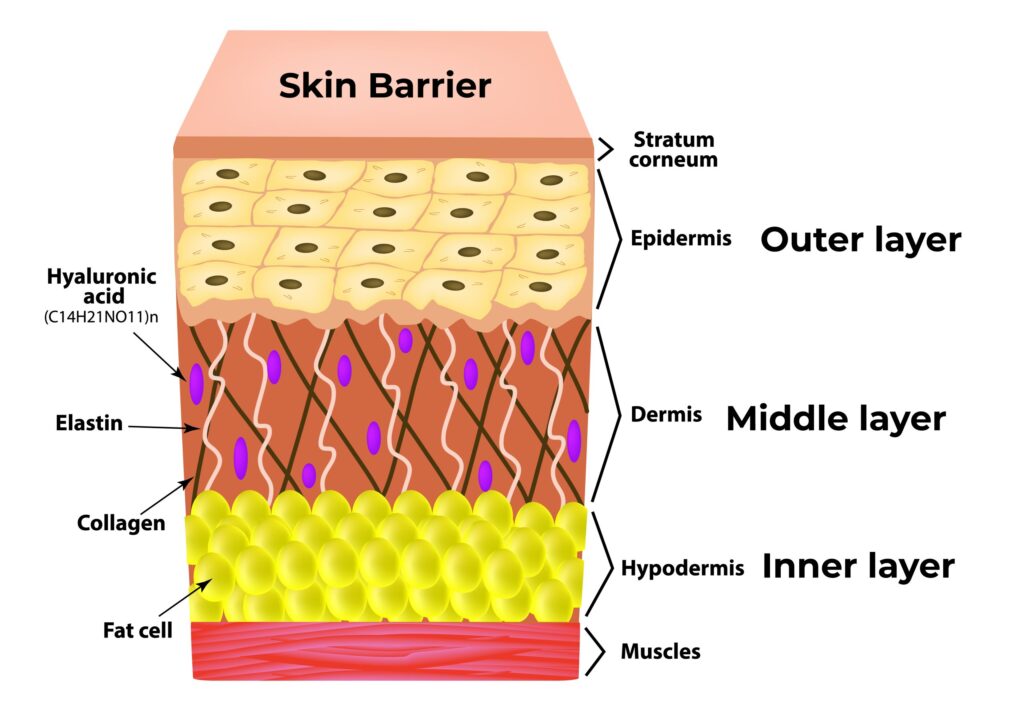
What Is the Skin Barrier? (And Why Is It So Important?)
The skin barrier is the outermost protective layer of your skin.
To put it simply, it acts as a shield that protects your skin from all kinds of issues.
The function of the skin barrier is to:
• Lock moisture within the skin
• Provide protection against pollution and bacteria
• Keep the skin healthy, hydrated, and smooth
When the skin barrier is strong, the skin:
• Feels smooth
• Remains hydrated
• Glows naturally
• Is not sensitive
However, when the skin barrier gets damaged, problems begin to arise.
Such as:
• Redness
• A burning sensation
• Sudden acne breakouts
• Dry patches
• Irritation immediately upon product application
• It becomes dull, and its natural brightness fades away
And often, people fail to realize that the actual underlying issue is a damaged skin barrier.
Now, let’s take a look at the habits that are silently destroying your skin barrier.
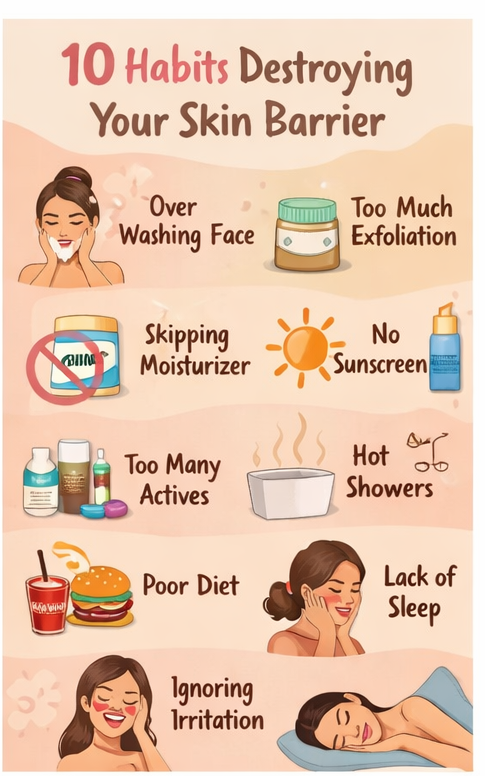
What are the habits that are damaging the skin?
1. Washing Your Face Too Frequently
Many people believe that the more they wash their face, the cleaner and smoother their skin will become—but this is not actually true.
In fact, this is a common mistake.
When you wash your face repeatedly, the skin’s natural oils get stripped away.
These natural oils protect the skin barrier and provide essential hydration exactly when it is needed.
If you wash your face too often, you may experience symptoms such as:
• A tight sensation in the skin
• Dry patches
• Irritation
What is the healthy habit?
Wash your face only twice a day:
In the morning
At night
And use a gentle cleanser.
2. Scrubbing Every Week
Many people consider exfoliation to be the secret to glowing skin.
Consequently, they begin scrubbing their face 3–4 times every week.
However, excessive scrubbing can be harmful to the skin; it can cause redness and leave the skin looking irritated.
Harsh scrubs can create microscopic tears in the skin.
This weakens the skin barrier.
What is the better option?
• Exfoliate just once or twice a week.
• Use a gentle chemical exfoliant.
Example ingredients:
• Lactic acid
• Mandelic acid
• PHA
3. Using Too Many Active Ingredients
In the world of skincare, certain ingredients are extremely popular.
Such as:
• Retinol
• Vitamin C
• AHA
• BHA
• Niacinamide
These ingredients are powerful.
However, when combined incorrectly, they can damage the skin barrier.
Example:
Using Retinol + AHA + Vitamin C all in the same routine.
This can lead to various skin issues:
• A burning sensation
• Peeling
• Redness
• Irritation
What is the solution?
Use only one active ingredient at a time.
Give your skin time to adapt.
4. Skipping Moisturizer
People with oily skin often skip using moisturizer.
A good moisturizer helps restore hydration and protect the skin barrier. If you’re confused about which one to choose, check our guide on best moisturizers for All skin types.
They believe that moisturizer will make their skin look greasy. But the truth is, moisturizer is crucial for the skin barrier.
Moisturizer helps to:
• Lock in hydration
• Repair the skin barrier
• Prevent dryness
If you skip moisturizer, your skin may produce even more oil.
Best ingredients:
• Ceramides
• Hyaluronic acid
• Glycerin
• Panthenol
5. Not Applying Sunscreen
If you want to make just one habit change to protect your skin—it should be applying sunscreen daily.
A good sunscreen helps restore hydration and protect the skin barrier. If you’re confused about which one to choose, check our guide on best Sunscreen for all skin and how to use .UV rays slowly damage the skin barrier.
Without sunscreen, your skin has to face:
• Premature aging
• Pigmentation
• Barrier damage
• Skin cancer
And sun damage continues to accumulate over time.
That is why using sunscreen daily is a must.
Even indoors.
Use a sunscreen with a minimum SPF of 30.
6. Using Too Many Skincare Products
The 10-step skincare routine is currently very trendy on social media.
However, not everyone’s skin requires that many products.
When you layer too many products, your skin becomes overwhelmed.
Sometimes, a simple routine is best.
Basic skincare routine:
Morning
• Cleanser
• Moisturizer
• Sunscreen
Night
• Cleanser
• Treatment
• Moisturizer
7. Showering with Very Hot Water
Hot showers feel relaxing.
But very hot water strips away the skin’s natural oils.
This can leave the skin dry and sensitive.
What is the healthy option?
Use lukewarm water.
This protects the skin barrier.
8. Ignoring Skin Irritation
Our skin sends us signals—telling us what *not* to do.
Such as:
• Burning sensations
• Redness
• Stinging
Yet, many people continue to use the same product regardless.
This only aggravates the problem.
If a product is causing irritation, stop using it immediately.
Give your skin time to heal. 9. Not Getting Proper Sleep
Sleep is important not just for your general health, but for your skin as well.
When you sleep, your skin enters “repair mode.”
Sleep deficiency can lead to:
• Dull-looking skin
• Increased skin sensitivity
• Slower healing
Healthy Habit:
Aim for 7–8 hours of sleep daily.
10. Poor Diet and Insufficient Water Intake
What you eat has a direct impact on your skin.
If your diet contains an excess of:
• Sugar
• Processed foods
• Junk food
• Cold beverages
it can lead to increased skin inflammation.
For healthy skin, include the following in your diet:
• Fruits
• Vegetables
• Nuts
• Healthy fats
And most importantly:
Drinking plenty of water will yield the greatest benefits.
Hydration is essential for maintaining a healthy skin barrier.
Signs Your Skin Barrier Is Damaged
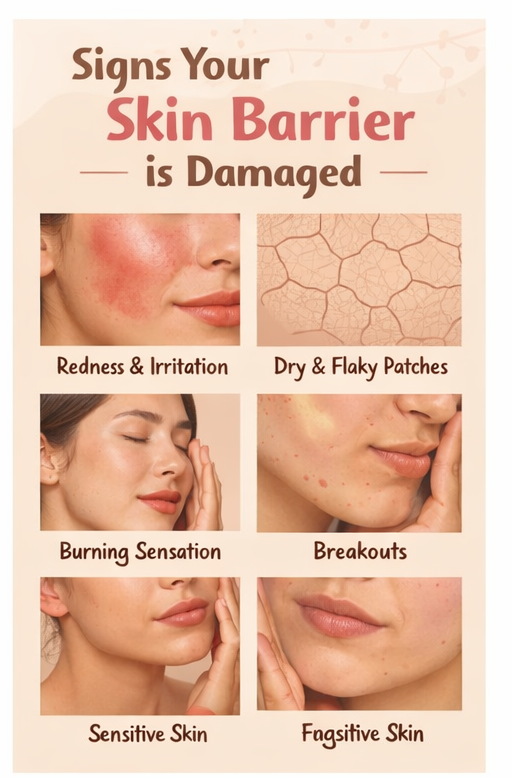
If your skin barrier is becoming compromised, you may notice the following signs:
• A burning sensation immediately after applying products
• Redness
• Sudden breakouts
• Rough texture
• Flaky skin
• Irritation
• A lack of lasting glow
If you are experiencing these symptoms, your skin is in need of gentle care.
How to Repair the Skin Barrier
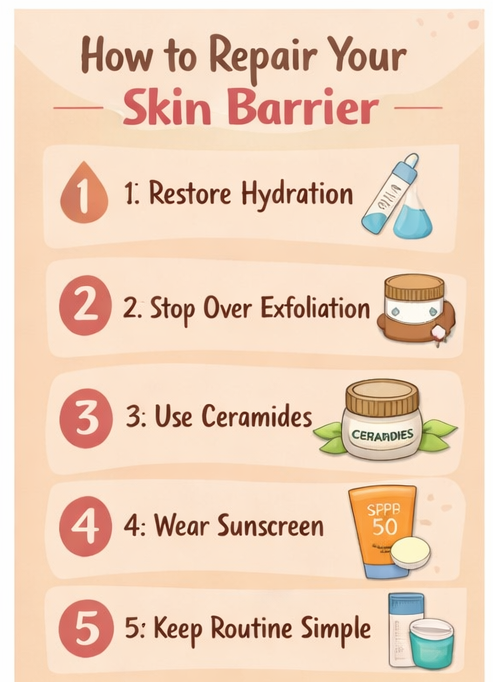
The good news is that we can repair the skin barrier, based on my personal experience.
All you need is a little patience and the right routine.
Follow these steps:
1. Simplify your skincare routine
2. Temporarily stop harsh actives
3. Use hydrating ingredients
4. Apply sunscreen daily
5. Use a gentle cleanser
6. Hydrate yourself
7. Read about products before using them
8. Know your skin
Consistency is important.
Simple Skin Barrier Repair Routine
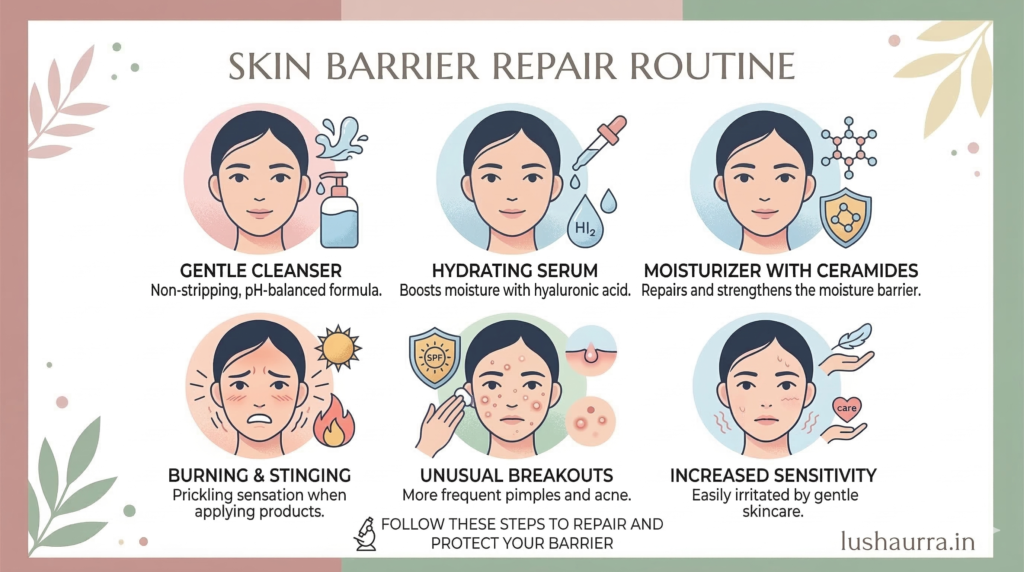
Morning routine
• Gentle cleanser
• Hydrating moisturizer
• Sunscreen
Night routine
• Cleanser
• Barrier repair cream
Simple routines skin ko recover karne mein help karte hain.
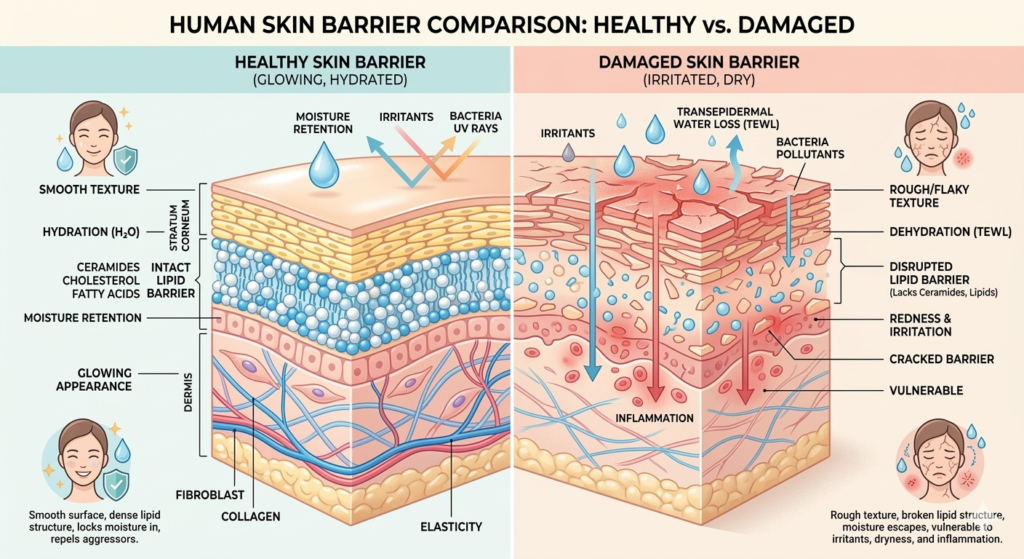
What Causes Skin Barrier Damage? (Scientific Reasons)
Skin barrier damage isn’t caused solely by skincare mistakes; quite often, environmental factors and lifestyle choices are also responsible.
Common causes include:
• Excessive sun exposure
• Pollution
• Harsh skincare products
• Over-exfoliation
• Stress
• Hormonal imbalance
• Insufficient water intake
• Failure to follow a skincare routine
When the skin barrier is damaged, the skin’s natural lipid layer becomes weakened. The function of this layer is to lock in moisture and block out harmful elements.
When this layer becomes compromised, the skin easily becomes dry, irritated, and sensitive—which, in turn, leads to the emergence of further skin problems.
Ingredients That Help Repair Skin Barrier
If the skin barrier has been damaged, certain specific ingredients can accelerate the recovery process; however, they must be used in appropriate amounts.
Ceramides
Ceramides are natural lipids found in the skin that strengthen the barrier.
Benefits:
• Improve skin hydration
• Prevent moisture loss
• Accelerate barrier repair
Niacinamide
Niacinamide is a powerful ingredient that strengthens the skin barrier.
Niacinamide is one of the most effective ingredients for repairing the skin barrier and reducing redness. You can read our detailed guide on niacinamide benefits for skin to understand how it works.
Benefits:
• Reduces redness
• Balances oil production
• Supports skin barrier repair
Hyaluronic Acid
This ingredient provides deep hydration to the skin.
Benefits:
• Plumps the skin
• Reduces dryness
• Protects the skin barrier
Centella Asiatica
This is also known as Cica.
Benefits:
• Soothes the skin
• Reduces inflammation
• Accelerates the healing process
Best Skincare Products for Skin Barrier Repair
From personal experience, let me share some products that help with the skin barrier and improve texture.
Gentle Cleansers
Examples:
• Cetaphil Gentle Skin Cleanser
• Simple Kind To Skin Refreshing Face Wash
• Minimalist Oat Extract Cleanser
Barrier Repair Moisturizers
Examples:
• CeraVe Moisturizing Cream
• Bioderma Atoderm Cream
• Dr. Sheth’s Ceramide & Vitamin C Moisturizer
Hydrating Serums
Examples:
• Minimalist Hyaluronic Acid Serum
• Plum 2% Niacinamide Serum
• COSRX Snail Mucin Essence
Skincare Routine Based on Skin Type
Every skin type has unique needs, and similarly, every skin presents different concerns. Keeping this in mind—and backed by expert research—I am sharing a few skincare routines with you.
A good routine for skin care is most important because a healthy skin is sign of right skincare routine so check our guide for best skin care routine
For Dry Skin
Morning Routine
• Hydrating cleanser
• Hyaluronic acid serum
• Rich moisturizer
• Sunscreen
Night Routine
• Gentle cleanser
• Ceramide moisturizer
For Oily Skin
Morning Routine
• Gel cleanser
• Lightweight moisturizer
• Sunscreen
Night Routine
• Cleanser
• Niacinamide serum
• Oil-free moisturizer
For Sensitive Skin
Morning Routine
• Mild cleanser
• Barrier repair cream
• Mineral sunscreen
Night Routine
• Cleanser
• Cica cream
Lifestyle Tips for Healthy Skin Barrier
It is not just skincare products—lifestyle, too, affects skin health and can exacerbate skin-related issues.
For a healthy skin barrier:
• Reduce stress
• Get adequate sleep
• Follow a healthy diet
• Avoid smoking
• Limit alcohol intake
Drink more water
All these habits contribute to improving skin health.
Myths About Skin Barrier
Myth 1: Oily skin does not need a moisturizer.
Reality:
Every skin type requires hydration—regardless of what type of skin it is.
Myth 2: Excessive exfoliation makes the skin glow.
Reality:
Over-exfoliation damages the skin barrier and strips away its natural oils.
Myth 3: Only expensive products are effective.
Reality:
The right ingredients are what matter—not the price—along with a consistent routine.
When Should You See a Dermatologist?
If the skin barrier has sustained significant damage, it is advisable to consult a dermatologist.
Consult a doctor if:
• There is severe redness
• There is constant irritation
• Your skin is peeling
• Your acne remains uncontrolled
• Nothing seems to be working
Professional treatment can accelerate skin recovery.
check our expert guide
Conclusion
The secret to healthy skin isn’t complicated routines; it lies in balanced skincare and healthy habits—which work much faster.
If you protect your skin barrier, your skin naturally becomes:
• Strong
• Hydrated
• Glowing
That is why the most important rule in skincare is:
Be gentle with your skin.
FAQ (Frequently Asked Questions)
How long does it take for the skin barrier to repair?
Typically, mild damage repairs within 2–4 weeks if a gentle skincare routine is followed.
Can exfoliation damage the skin barrier?
Yes. Over-exfoliation is a common cause of skin barrier damage.
Can oily skin also suffer from barrier damage?
Absolutely. Over-cleansing and the use of harsh products can damage the skin barrier, even in oily skin types.
Which ingredients help repair the skin barrier?
The best ingredients include:
• Ceramides
• Niacinamide
• Panthenol
• Hyaluronic acid
Final Thoughts
Healthy skin isn’t built on expensive products, but rather on healthy habits—and consistency.
Small habits, such as:
• Over-washing
• Skipping sunscreen
• Using too many active ingredients
can gradually damage the skin barrier.
But the good news is that when you change these habits, your skin naturally begins to recover.
Follow a gentle skincare routine.
Treat your skin with patience and care.
And remember—a strong skin barrier is the true secret to glowing skin.