
Table of Contents
ToggleWhy Your Foundation Looks Patchy (And No One Is Telling You the Real Reason)
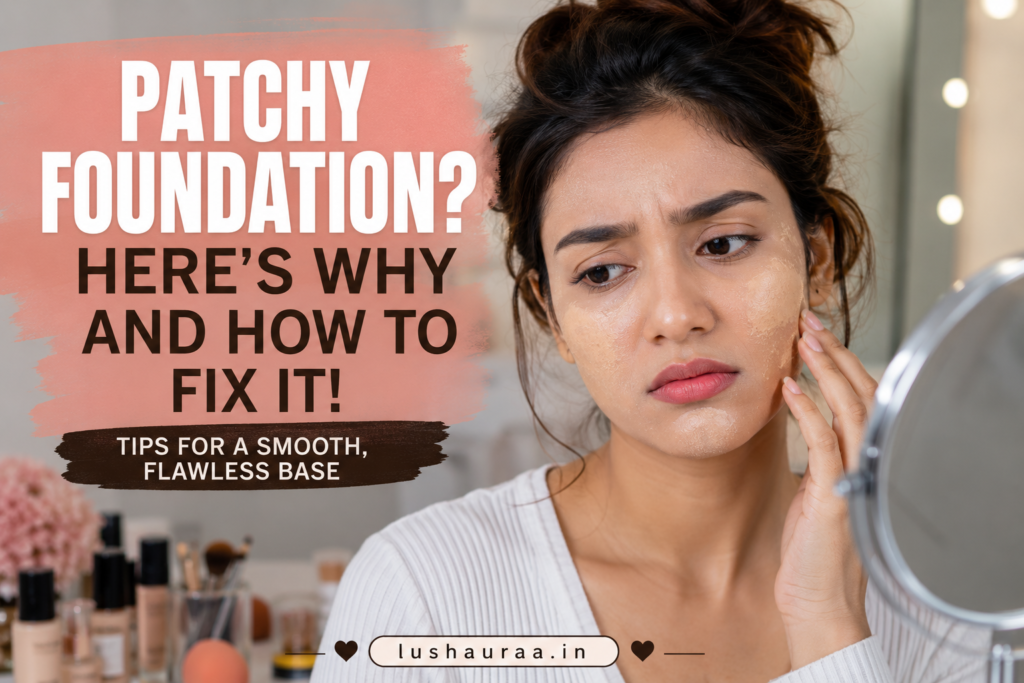
Let’s be honest for a moment.
You buy a new foundation… you’re super excited… you apply it… and instead of looking smooth and radiant, your skin suddenly looks even worse. Suddenly, dry patches pop up. Your skin texture becomes glaringly visible. And that “flawless base” you see on Instagram? It’s nowhere in sight.
And the worst part?
You blame the foundation.
I used to do the exact same thing.
But after ruining my makeup countless times (and, truth be told, wasting money on products I didn’t even need),
I came to a realization—one that was a little hard to swallow:
The foundation is almost never to blame. The fault lies in the way we use it.
This isn’t going to be one of those boring “cleanse-tone-moisturize” blog posts.
Let’s actually talk about where things really go wrong.
And perhaps, through this blog post, you’ll finally discover exactly *Why Your Foundation Looks Patchy*.
It starts way before makeup (and nobody pays attention to this)
Most people think that foundation is the first step.
But that is not the case.
Foundation is like the final coat on a wall.
If the wall underneath is uneven, cracked, or dry… the paint cannot fix it.
In fact, it only serves to accentuate those flaws even more.
The exact same thing happens with your skin.
Sometimes, your skin looks perfectly fine in the mirror; but the moment you apply foundation,
these issues suddenly become glaringly obvious:
Tiny flakes of dry skin
Rough texture
Uneven patches
This happens because makeup exposes the imperfections that skincare keeps hidden.
And therein lies the real problem—
We don’t prep our skin based on how it will look *after* makeup application; instead, we prep it based on how it looks *without* any makeup.
There is a huge difference between the two. And today, we are going to explore exactly what that difference is.
First you understand why and how your skin not fit for any product which mistake you did ..check these article for better understanding
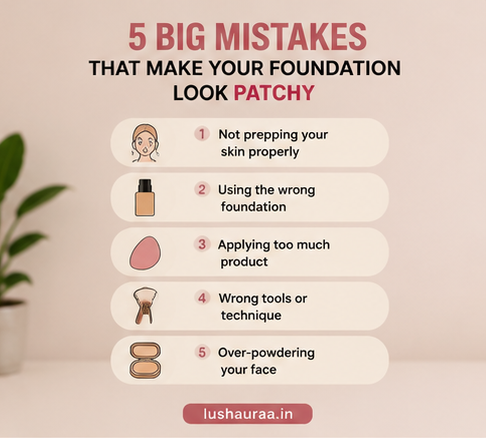
The Real Reason why Your Foundation Looks Patchy
Patchy foundation typically occurs when your skin and makeup aren’t working in harmony—meaning the products you are using aren’t suited to your specific skin type.
It is akin to applying paint to a rough wall—it simply won’t spread evenly.
And most people fail to realize that, rather than concealing skin issues, makeup often serves to highlight them instead.
So, if your skin base is:
Dry
Textured
Oily in certain areas
Foundation will only accentuate these characteristics. So, let’s find out which mistakes you should avoid making.
And if you’d like to learn more about skincare, be sure to read this article.
Mistake #1: You’re Not Prepping Your Skin for Makeup
This is the biggest issue.
You might be doing skincare — but not makeup prep.
There’s a difference.
Skincare = long-term results
Makeup prep = immediate smooth base
What goes wrong:
You apply moisturizer and instantly start makeup
Skin is still wet or greasy
Foundation starts separating
What actually works:
Clean your face
Apply moisturizer
Wait at least 3–5 minutes
Let it settle into your skin
👉 Your skin should feel soft, not sticky
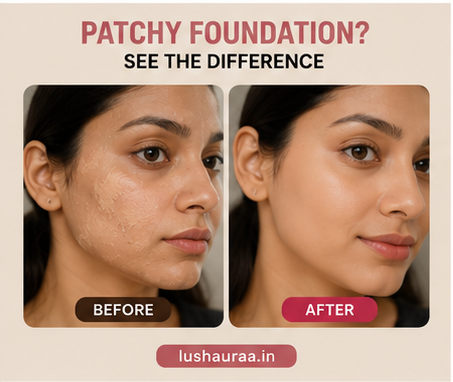
Mistake #2: Using the Wrong Foundation for Your Skin Type
This is where most people waste their money—buying just anything without doing their research.
They spot a viral product… buy it… and expect a miracle to happen.
But here is the reality:
Matte foundation on dry skin → Cracking and patchiness
Dewy foundation on oily skin → Slipping and separation
What you should do instead:
If your skin feels tight → Apply a hydrating foundation
If your skin gets oily → Choose an oil-control/matte formula
👉 Don’t follow trends. Follow your skin.
Mistake #3: Applying Too Much Product
This is a silent mistake.
You want coverage… so you apply more.
And even more.
And suddenly, layers of foundation pile up on your face—which looks terrible. Not only does it ruin your look, but it also wastes product.
That’s when:
It starts to look cakey. Fine lines begin to form.
It starts to break apart.
The Fix:
Use less product and apply it gradually.
Start with just one pump.
Apply it only where it is needed.
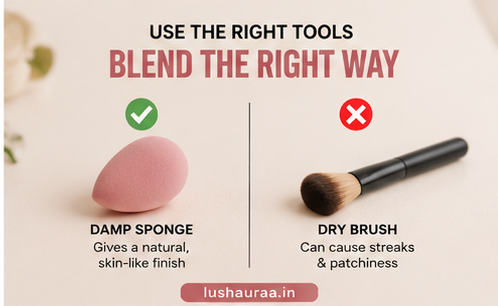
Mistake #4: Wrong Application Technique
This one is underrated.
Even a good foundation can look bad with wrong blending.
Common mistakes:
- Dragging foundation with brush
- Using dry sponge
- Rubbing instead of blending
Better way:
- Use a slightly damp sponge
- Tap gently (don’t rub)
- Blend in layers
👉 Blending is more important than the product itself.
Mistake #5: Skipping Primer (or Using the Wrong One)
Primer isn’t strictly necessary—but, speaking from personal experience, it helps *immensely* in making your makeup look its absolute best.
Especially if:
You have large pores
Your skin texture is uneven
Your T-zone is oily
What a primer does:
Smooths out the skin
Helps foundation adhere better
Prevents patchiness
👉 If your makeup tends to break down easily, a primer can fix that.
Mistake #6: Over-Powdering Your Face
This is where many people ruin their base.
They apply powder everywhere… thinking it will “set” makeup.
But too much powder:
- Dries out skin
- Creates patches
- Makes foundation look heavy
Fix:
Apply powder only on:
- Under eyes
- Around nose
- Oily areas
Keep rest of skin natural.
Mistake #7: Ignoring Your Skin Condition
Sometimes, the issue isn’t the makeup itself. The actual problem lies elsewhere, yet we focus our efforts on the wrong things. Often, we need to prioritize skincare, but instead, we pour our energy into buying more products.
If your skin barrier is damaged, nothing—makeup included—will sit right.
Symptoms:
Your foundation looks uneven every time you apply it.
Your skin feels irritated or stinging.
Products do not absorb properly.
👉 In such cases, focus on your skincare first.
For the basics, you can read this guide:
👉 A Simple Skincare Routine for Glowing Skin (Beginner’s Guide)
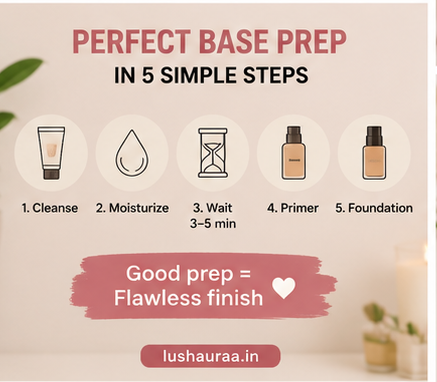
A Simple Routine That Actually Works
If everything feels confusing, follow this:
- Cleanse your face
- Apply moisturizer
- Wait 3–5 minutes
- Apply primer (optional)
- Use small amount of foundation
- Blend gently
- Conceal where needed
- Light powder on oily areas
That’s it.
No 10-step routine needed.
If you want know how routine really work check these guide
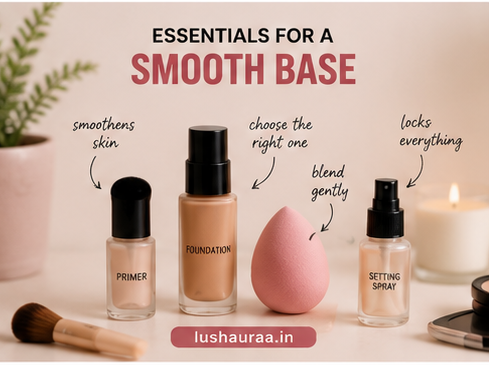
Best Products to Fix Patchy Foundation
If your foundation still looks patchy, your tools/products might be the issue.
Here are some beginner-friendly essentials you can add:
1. Hydrating Primer
Helps smooth dry areas and gives even base
👉 Check these products.
1 Mars primer
2 Swiss Beauty primer
3 INSIGHT Primer
2. Lightweight Foundation
Easier to blend, less patchy
👉 Best for beginners
1 Mars foundation
2 Maybelline foundation
3 Tirtir foundation
3. Beauty Sponge
Gives natural finish compared to brushes
👉 Always use slightly damp
. Check these Sponge –Try Now
4. Setting Spray
Locks makeup and prevents patchiness
👉 Gives smooth finish-Check Here
Common Mistakes You Should Stop Immediately
Keep these mistakes in mind:
Applying foundation on dry skin
Using the wrong shade
Not blending properly
Using too much powder
Skipping skin prep
If You want Know more about what you should avoid check our best article
Quick FAQs
Why does my foundation look patchy even after skincare?
Because your skin is either not prepped properly or you’re using the wrong product type.
How do I make my foundation look smooth?
Prep your skin, use less product, and blend properly.
Is primer necessary?
Not always, but it helps a lot for smooth application.
Final Thoughts
Patchy foundation is frustrating — but it’s fixable.
You don’t need expensive products.
You don’t need perfect skin.
You just need to:
- Prep better
- Use less product
- Understand your skin
And trust me…
Your makeup will start looking 10x better instantly.