
Best monsoon skincare for oily skin — that’s what I’ve spent years figuring out, one humid, sticky season at a time. I actually love the monsoon itself: the chai, the pakoras, the smell of wet soil. My oily-combination skin doesn’t feel the same way.
As soon as the humidity starts going up, my face gets oily, especially around the T-zone. My pores look more visible, my skin feels sticky, and somehow a breakout always decides to appear at the worst possible time. If you have oily or combination skin, you probably know exactly what I’m talking about.
I’ve been dealing with oily-combination skin for around 6–7 years, and monsoon has always been a little difficult for me. Summer is easier to understand because I know the heat and sweat are making my skin oily. Winter is usually much calmer. Monsoon is different — some days my skin is extremely oily, while on other days certain areas feel dry or patchy.
After trying different products and routines over the years, I’ve realized that oily skin doesn’t need a complicated routine — it mostly needs the right balance. If you’re still figuring out the fundamentals, start with this beginner skincare guide.
So, if your skin also gets extra oily during the rainy season, here’s the routine I follow and what has helped me.
Why Does Oily Skin Become More Difficult During Monsoon?
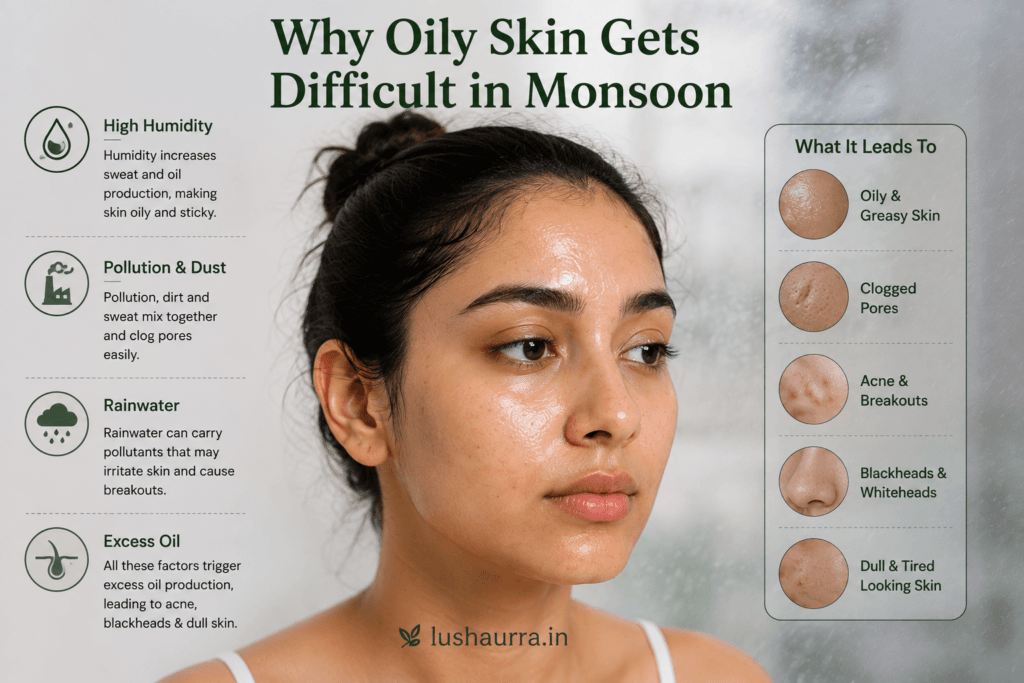
The first thing I noticed about monsoon is that my skin simply feels different. The humidity rises, and there’s much more moisture in the air. Because of that, sweat doesn’t evaporate as easily, and your face can start feeling greasy much faster. For people with naturally oily skin, this can be particularly annoying.
Then there’s dust and pollution. When sweat, humidity, pollution, and dirt sit on your skin together, your pores can become clogged more easily — that’s when you may start noticing more blackheads, whiteheads, or small breakouts. See more on what quietly worsens skin over time. This lines up with what dermatologists generally note about how humidity affects oil production and acne.
“It’s just rain, my skin will be fine.” — Rainwater in polluted cities can pick up pollutants from the atmosphere. I personally don’t like leaving rainwater on my face for a long time — if I get caught in the rain, I wash my face gently once I’m home.
So, for me, the biggest monsoon problems are basically:
Once I understood that, it became much easier to build a routine around it.
The Full Routine
This is the closest thing to the best monsoon skincare for oily skin I’ve found — five steps, in order, with honest notes on why each one earns its place during the rainy season.
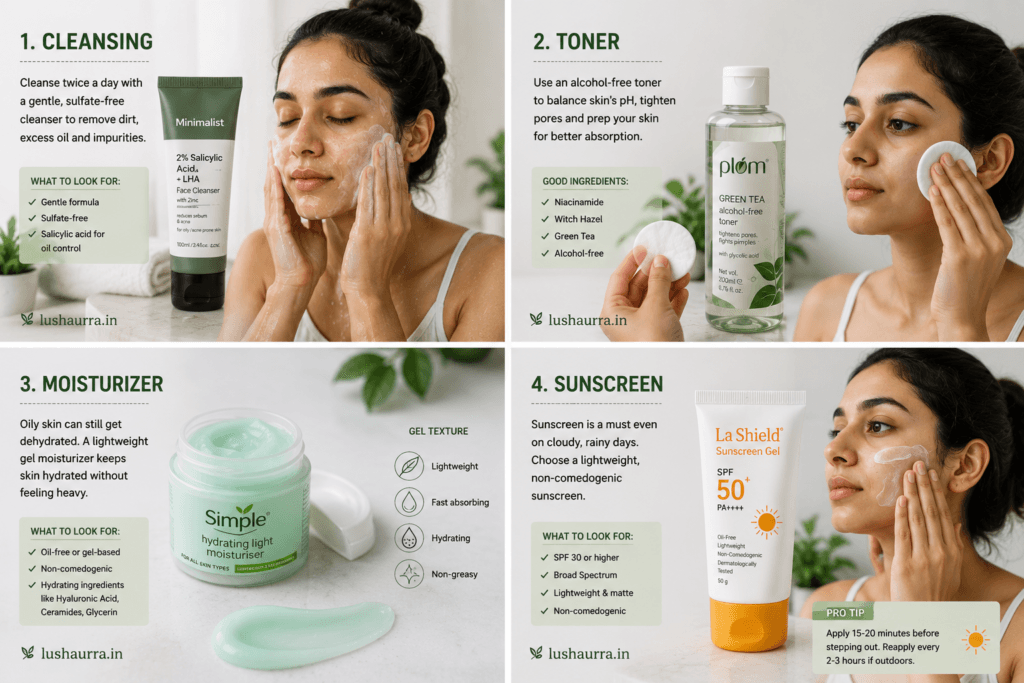
Cleansing — Don’t Keep Washing Your Face
This was one of my biggest mistakes. Whenever my face looked oily, I used to think washing it again would solve the problem — sometimes several times a day, because I hated that greasy feeling. It sounds logical, but it didn’t really help. If you keep washing your face with a strong cleanser, you strip away too much natural oil, and skin can start producing even more of it in response.
What I do: cleanse twice a day, rinse with water instead of cleanser if I’ve been sweating heavily, prefer a gentle sulfate-free cleanser (salicylic acid-based if skin is oily/acne-prone), and always follow with moisturizer. Gel or lightweight foam cleansers feel best in monsoon — creamy ones feel too heavy once humidity is already high.
My pick: Minimalist 2% Salicylic Acid + LHA Face Cleanser — sulfate-free, non-drying, and the one I keep repurchasing through monsoon.
Pros
- Controls oil without over-drying
- Sulfate-free, gentle daily use
- Salicylic acid keeps pores clear
Cons
- Over-cleansing still worsens oiliness
- Not for very dry/sensitive skin daily
Toner — You Don’t Need a Fancy One
I used to think toner was just another product companies wanted us to buy. But once I started using the right kind, I found it useful, especially on days when my skin felt particularly oily. For oily skin, look for niacinamide (oil control, barrier support), witch hazel, and an alcohol-free formula if your skin gets dry or irritated easily.
Apply gently with hands or a cotton pad — no need to rub it in aggressively. And if you’d rather skip toner altogether, that’s okay too; a good cleanser, moisturizer and sunscreen matter much more.
My pick: Plum Green Tea Alcohol-Free Toner — budget-friendly and gentle enough for daily use.
Pros
- Alcohol-free, non-stripping
- Niacinamide supports oil balance
- Budget-friendly, daily use
Cons
- Optional — skippable step
- Some formulas still sting sensitive skin
Moisturizer — Yes, Even If Your Skin Is Oily
For a long time I thought, “my face already has enough oil, why add moisturizer?” Eventually I realised oily skin can still become dehydrated — skip moisturizer completely and skin often feels tight and uncomfortable instead of less oily. During monsoon I prefer gel-based, water-based, hyaluronic acid, or niacinamide-based formulas, and stay away from heavy creams. Applying on slightly damp skin helps it spread more easily. Want to compare textures by skin type first? See this moisturizer guide.
My pick: Neutrogena Hydro Boost Water Gel — a genuine cult favourite for oily and combination skin, absorbs fast with no greasy after-feel.
Pros
- Absorbs fast, no greasy after-feel
- Genuine cult favourite for oily skin
- Layers well under sunscreen
Cons
- May not be enough hydration in AC-heavy days
- Slightly tacky if over-applied
Sunscreen — Cloudy Weather Doesn’t Give You a Free Pass
This is probably one of the easiest steps to skip during monsoon — grey skies make it feel unnecessary. But UV exposure doesn’t disappear because the weather is cloudy. For oily skin, a matte or gel-like finish is far more comfortable than something thick and creamy. Look for SPF 30–50, a lightweight texture, a non-comedogenic formula, and a gel or silicone-based finish — and reapply if you’re outdoors or sweating. For a full budget shortlist, see Best Sunscreen Under ₹500 in India.
My pick: Re’equil Ultra Matte Dry Touch Sunscreen SPF 50 PA++++ — no white cast, sweat-resistant, and one of the most reviewed matte sunscreens for oily skin in India.
Pros
- No white cast, sweat-resistant
- Matte dry-touch finish
- SPF 50 PA++++ protection
Cons
- Needs reapplication outdoors
- Matte finish can feel drying for some
Exfoliation & Clay Masks
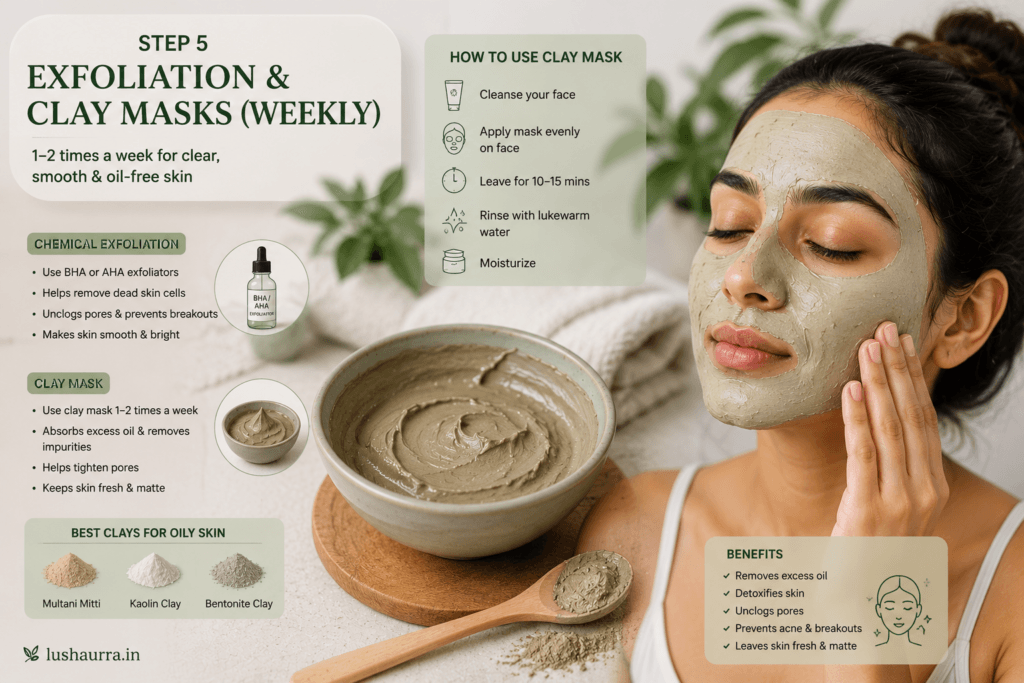
I don’t think your routine needs ten weekly treatments — two things help when skin feels particularly oily: gentle exfoliation and clay masks. A mild BHA or salicylic acid exfoliant helps with excess oil and clogged pores once or twice a week; avoid rough physical scrubs, especially with active pimples. More exfoliation doesn’t mean better skin — irritation or unusual dryness is a sign to slow down.
Multani mitti has been part of Indian skincare for generations — it absorbs excess oil and leaves skin feeling cleaner. Kaolin clay is a gentler alternative for some. Mix with a little rose water, apply for 10–15 minutes, and don’t let it dry to a tight, cracking finish.
My pick: Plum Green Tea Clear Face Mask — a ready-made, easy alternative if you don’t want to mix your own Multani mitti paste.
Pros
- Clears monsoon-clogged pores
- Ready-made, no mixing needed
- Gentle enough for weekly use
Cons
- Overuse can dry out skin
- Patch-test if skin is sensitive
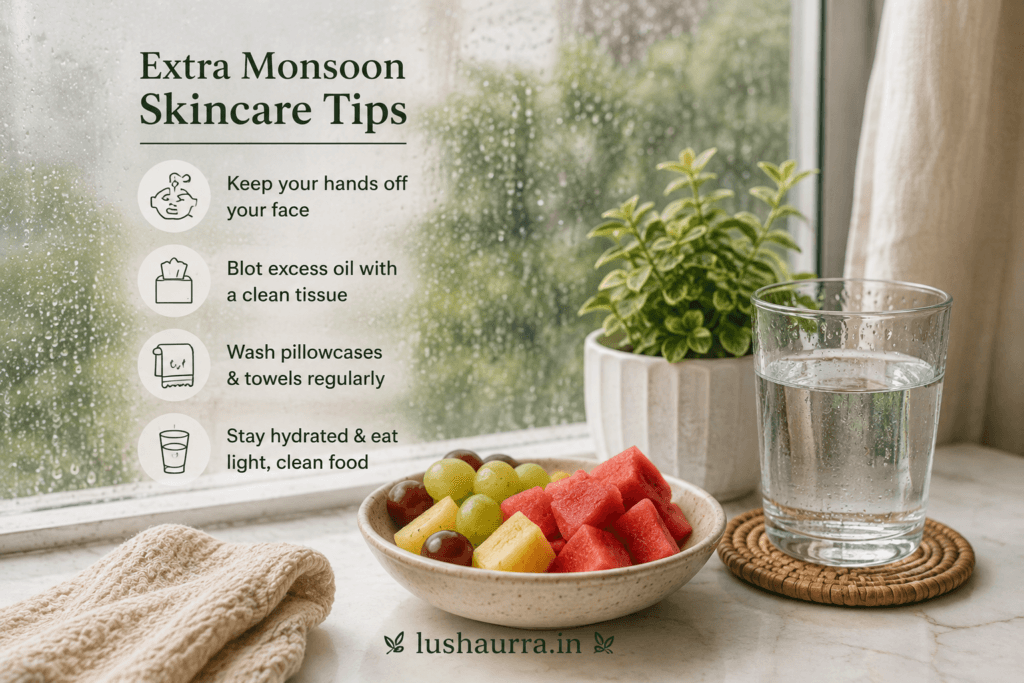
Extra Tips That Have Helped Me
1. Blotting Papers
If your face gets shiny mid-day, you don’t have to wash it again — press a blotting paper over oily areas. Handy at work or when you’re out.
2. Breathable Masks
Sweat and moisture trapped around the mouth and cheeks can contribute to breakouts. Wash reusable masks regularly.
3. Don’t Blame Skincare Alone
Food can play a role for some people. Love your monsoon snacks, but if fried food every day shows up on your skin, cut back a little.
4. Keep Drinking Water
It’s easy to forget hydration once the weather feels cooler — your body still needs it during monsoon.
5. Clean Pillowcase & Towel
Change pillowcases regularly and let towels dry fully. Damp fabric in humid weather is a breeding ground you don’t want near your face.
6. Keep Makeup Light
BB cream or tinted moisturizer breathes better than heavy, layered coverage combined with sweat and humidity.
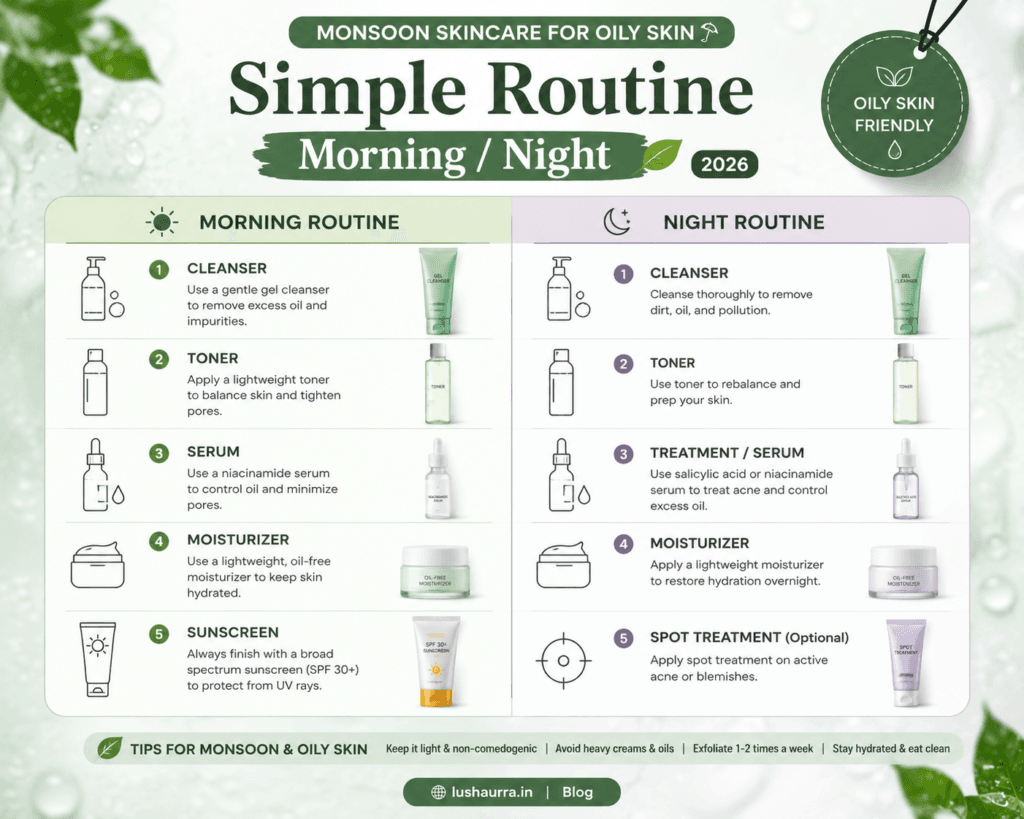
My Simple Monsoon Skincare Routine
Morning
- Gentle cleanser
- Toner, if you like using one
- Lightweight gel moisturizer
- Sunscreen SPF 30–50
Night
- Cleanser
- Toner, if you use one
- Lightweight moisturizer
- Optional serum, such as niacinamide
If wearing makeup or a lot of sunscreen, double-cleanse first with micellar water. Once or twice a week: mild BHA exfoliation + Multani mitti or kaolin clay mask.
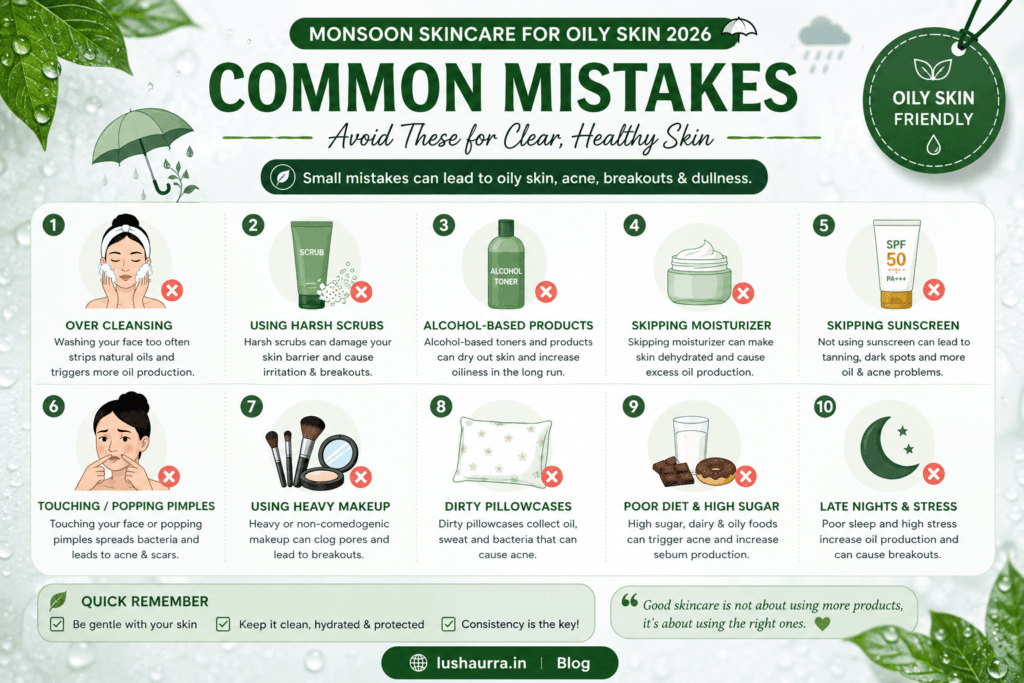
Common Mistakes I See People Making During Monsoon
Starting Five New Products Together
A breakout appears and suddenly it’s a new wash, toner, serum, exfoliant and mask — impossible to tell what irritated your skin. Introduce one product at a time.
Popping Pimples
Squeezing worsens inflammation and can leave dark marks or scars behind.
Ignoring Body Breakouts
Sweat and friction cause spots on the back, chest and shoulders too — loose, breathable clothing helps.
Forgetting Haircare Touches Skin
Hair oils and styling products near the hairline can trigger small bumps along the forehead.
Giving Up on a Product Too Quickly
Skincare rarely shows results in three days — give it real time unless it’s actively irritating your skin.
Cream vs. Gel Moisturizer — Which Wins in Monsoon?
Heavy creams feel comforting in winter, but in monsoon they usually sit on top of skin instead of absorbing, trapping sweat underneath. Gel and water-based formulas absorb faster and leave no heavy film — exactly why they outperform creams for oily and combination skin once humidity climbs.
If skin still feels tight after a gel moisturizer, that’s usually a sign to layer a hydrating toner underneath — not switch to a heavier cream. Curious about lightweight Korean picks too? Read this.
Products I’d Recommend for This Routine
| Step | Product | Link |
|---|---|---|
| Cleanser | Minimalist 2% Salicylic Acid + LHA Face Cleanser | Buy here |
| Toner | Plum Green Tea Alcohol-Free Toner | Buy here |
| Moisturizer | Neutrogena Hydro Boost Water Gel | Buy here |
| Sunscreen | Re’equil Ultra Matte Dry Touch Sunscreen SPF 50 | Buy here |
| Clay Mask | Plum Green Tea Clear Face Mask | Buy here |
Prices and availability may change — always check the latest listing before buying. This isn’t a paid promotion, just what has genuinely worked for me and gets recommended often for oily skin in India.
Frequently Asked Questions
How many times should I wash my face during monsoon?
Can I skip moisturizer if I have oily skin?
How often should I use Multani mitti?
Do I need sunscreen when it’s cloudy?
Which ingredient is useful for oily or acne-prone skin?
Can food cause breakouts?
Final Thoughts
If there’s one thing I’ve learned after years of dealing with oily-combination skin, it’s that consistency matters much more than having a bathroom full of skincare products. You don’t need to change your entire routine every time monsoon arrives — clean your skin gently, keep it hydrated, protect it with sunscreen, and don’t keep adding new products just because your skin looks a little different one day.
And most importantly, pay attention to your own skin. Something that works really well for me might not work for you — skin behaves differently from person to person, and sometimes you need a little trial and error to figure out what actually suits you. If a product makes your skin irritated, don’t force yourself to keep using it just because someone online said it’s amazing.
And if your acne is persistent, painful, or getting worse, it’s worth talking to a dermatologist instead of endlessly experimenting with products at home.
For now, I’m going to enjoy the rain, have my chai and pakoras, and try not to complain every time my T-zone gets shiny. Because honestly, that’s just monsoon life. 🌧️
Some links in this post are affiliate links. We may earn a small commission if you purchase through them, at no extra cost to you.